Guide to Starting a Virtual Assistant Business in 2026

Guide to Starting a Virtual Assistant Business in 2026
Guide to Starting a Virtual Assistant Business in 2026
Dec 14, 2025
Remote work is reshaping the business world, and the demand for virtual assistants is set to surge as we approach 2026. Entrepreneurs everywhere are seeking flexible, scalable solutions, making starting a virtual assistant business more attractive than ever.
This comprehensive guide will take you through every essential step, from understanding the industry and setting up legally, to effective branding, client acquisition, compliance, and future-proofing your operations. Discover how to build a profitable business, avoid legal hurdles, and carve out your niche in a growing market. Ready to turn your idea into a thriving reality? Let’s get started.
Understanding the Virtual Assistant Industry in 2026
Remote work has rapidly transformed the business landscape, and starting a virtual assistant business is now seen as a smart, future-ready move. Understanding the industry’s scope, trends, and challenges is the first step to building a strong foundation.
What is a Virtual Assistant Business?
A virtual assistant business delivers remote administrative, technical, creative, and support services to clients. Typical offerings include inbox management, bookkeeping, social media, customer support, data entry, research, and executive assistance.
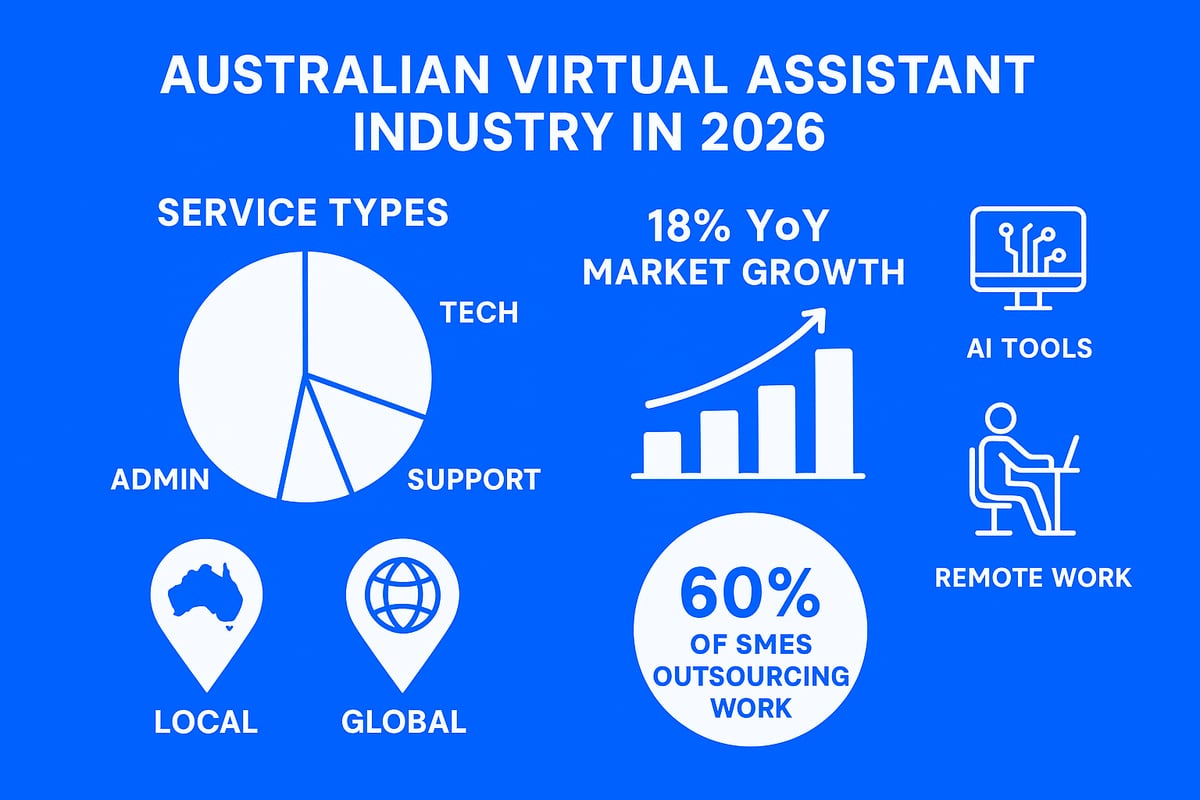
The sector has evolved from solo freelancers to agencies and niche specialists. In Australia, VAs serve both local and international clients, often working from home or co-working hubs. As the industry matures, growth is significant. In fact, the Growth of Australia's VA and OBM industry shows an 18% year-on-year increase as of 2025.
Gaining clarity on your services and understanding industry trends is essential when starting a virtual assistant business.
Is a Virtual Assistant Business Right for You?
Not everyone is suited to starting a virtual assistant business. Success begins with strong organisation, excellent communication, self-motivation, and adaptability. You’ll need proficiency in digital tools, time management, and client relations.
Deciding between being a generalist or a specialist is crucial. For example, VAs focused on medical admin or real estate support often command higher rates.
A clear business plan helps you assess your fit and direction, which is vital before starting a virtual assistant business.
Market Trends and Opportunities in 2026
The future is bright for those interested in starting a virtual assistant business. Remote work is now normal, so businesses are increasingly outsourcing support functions. Demand is rising for VAs skilled in tech and AI, like automation, CRM, and project management.
Australian VAs are attractive to global clients due to English fluency and favourable time zones. Around 60% of SMEs now outsource at least one function. By staying informed on these trends, you can position yourself for long-term success when starting a virtual assistant business.
Common Challenges and How to Overcome Them
Starting a virtual assistant business comes with challenges. Competition is fierce, so differentiation is key. Many VAs face isolation and must develop strong self-discipline.
Rapid tech changes require ongoing upskilling. Those who adopt AI tools and robust systems can offer more value and efficiency. Continued learning and building solid operational processes are essential for sustainability in starting a virtual assistant business.
Step 1: Planning and Setting Up Your Virtual Assistant Business
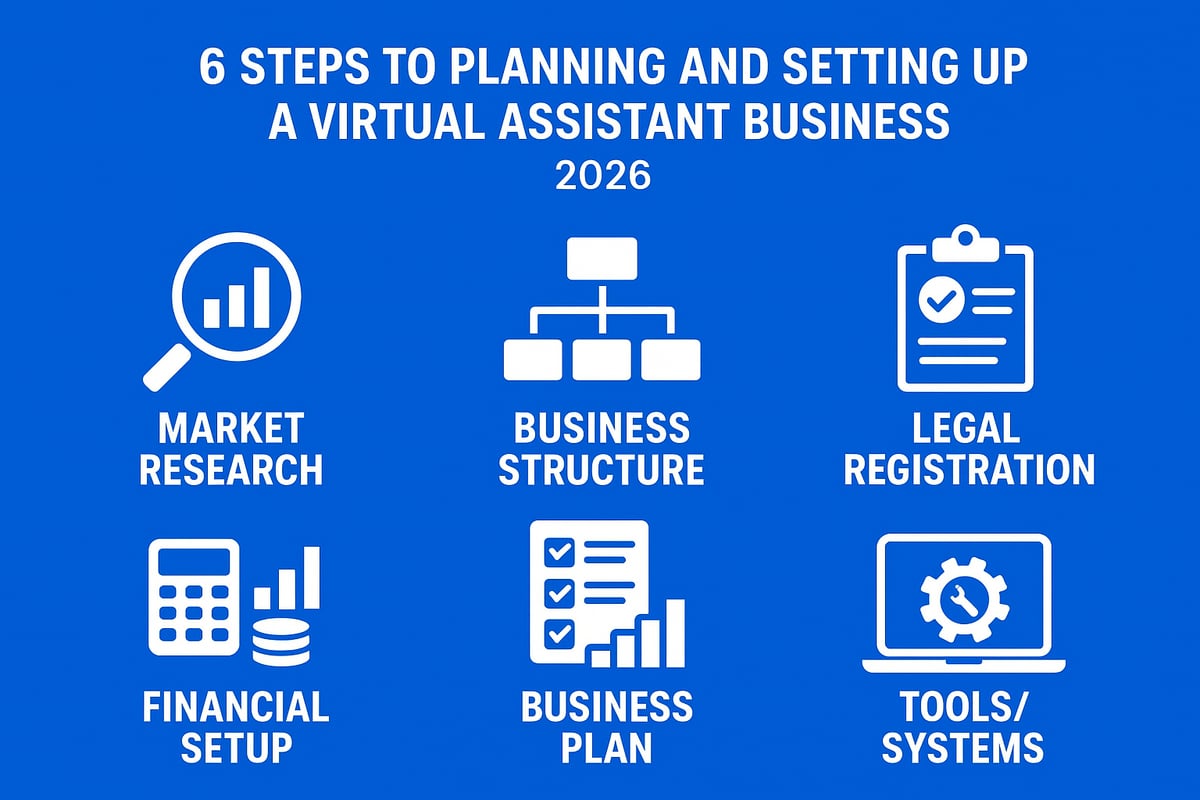
Starting a virtual assistant business in 2026 means entering a dynamic landscape with endless potential. Careful planning and a solid foundation are essential for long-term success. This step-by-step guide walks you through the core actions required to move from idea to launch, ensuring every detail is covered for a smooth start.
Researching the Market and Defining Your Services
Understanding your target market is the first step in starting a virtual assistant business. Analyse the services and pricing offered by competitors to identify gaps. Look for underserved niches, such as industry-specific admin or creative support, where you can offer unique value.
Decide which core services you will provide. Common options include social media management, inbox triage, bookkeeping, and executive assistance. Package your services as hourly, retainer, or project-based options to suit different client needs.
Specialising in a niche can help you reduce competition and increase your rates. By focusing your marketing and refining your skills, starting a virtual assistant business becomes more manageable and profitable.
Choosing the Right Business Structure
Selecting the right business structure is crucial when starting a virtual assistant business. In Australia, the main options are sole trader, partnership, and company. Your choice affects tax, liability, and growth potential.
Structure | Pros | Cons |
|---|---|---|
Sole Trader | Simple setup, low cost, full control | Unlimited liability, less credibility |
Partnership | Shared responsibility, easy to form | Joint liability, potential conflicts |
Company | Limited liability, scalable | Higher costs, more compliance |
Most virtual assistants begin as sole traders, then move to a company structure as their business grows. According to Sprintlaw, sole trader remains the most popular entry point. Consider your long-term goals when choosing a structure for starting a virtual assistant business.
Registering Your Business and Meeting Legal Requirements
Registering your business is a vital step in starting a virtual assistant business. Obtain an Australian Business Number (ABN) and register your business name with ASIC if you are not trading under your own name. Consider trademark registration to protect your brand identity.
If you plan to incorporate, you will need to obtain an Australian Company Number (ACN). Before registering, check the availability of your chosen business name and potential trademarks to avoid legal issues.
Compliance at this stage ensures your business starts on solid legal ground. Proper registration is essential for building trust with clients and avoiding costly mistakes when starting a virtual assistant business.
Setting Up Business Finances and Banking
Financial organisation is key to starting a virtual assistant business efficiently. Open a dedicated business bank account to separate personal and business finances. This makes tax reporting and compliance much easier.
Invest in accounting software to manage invoicing, expenses, and record keeping. If your turnover is expected to exceed $75,000 per year, register for GST with the ATO. Most small businesses now use cloud-based tools for financial management.
Keeping your finances organised from day one ensures you stay compliant and have a clear picture of your business health. This step is essential for anyone starting a virtual assistant business.
Creating a Business Plan and Growth Strategy
A detailed business plan is a must when starting a virtual assistant business. Define your vision, mission, goals, and target market. Map out your marketing approach, financial forecasts, and operational plans for at least the first year.
Break your launch into a 90-day action plan to build early momentum. A written plan increases your accountability and helps you track progress. For expert guidance, consider Business planning and clarity sessions to refine your strategy and avoid common pitfalls.
A strong plan brings clarity and direction, making starting a virtual assistant business less overwhelming and more strategic.
Essential Tools and Systems for Virtual Assistants
Using the right tools and systems streamlines operations when starting a virtual assistant business. Project management platforms like Asana, Trello, or Notion help you track tasks and deadlines. Communication tools such as Slack, Zoom, and Microsoft Teams support collaboration with clients.
File sharing services like Google Workspace and Dropbox keep your documents organised. Automation tools, including AI-powered scheduling and CRM systems, can boost your efficiency and save your clients time.
VAs who leverage automation and smart systems deliver more value and operate at a higher level. Investing in these tools is a smart move for anyone starting a virtual assistant business.
Step 2: Branding, Positioning, and Building Your Online Presence
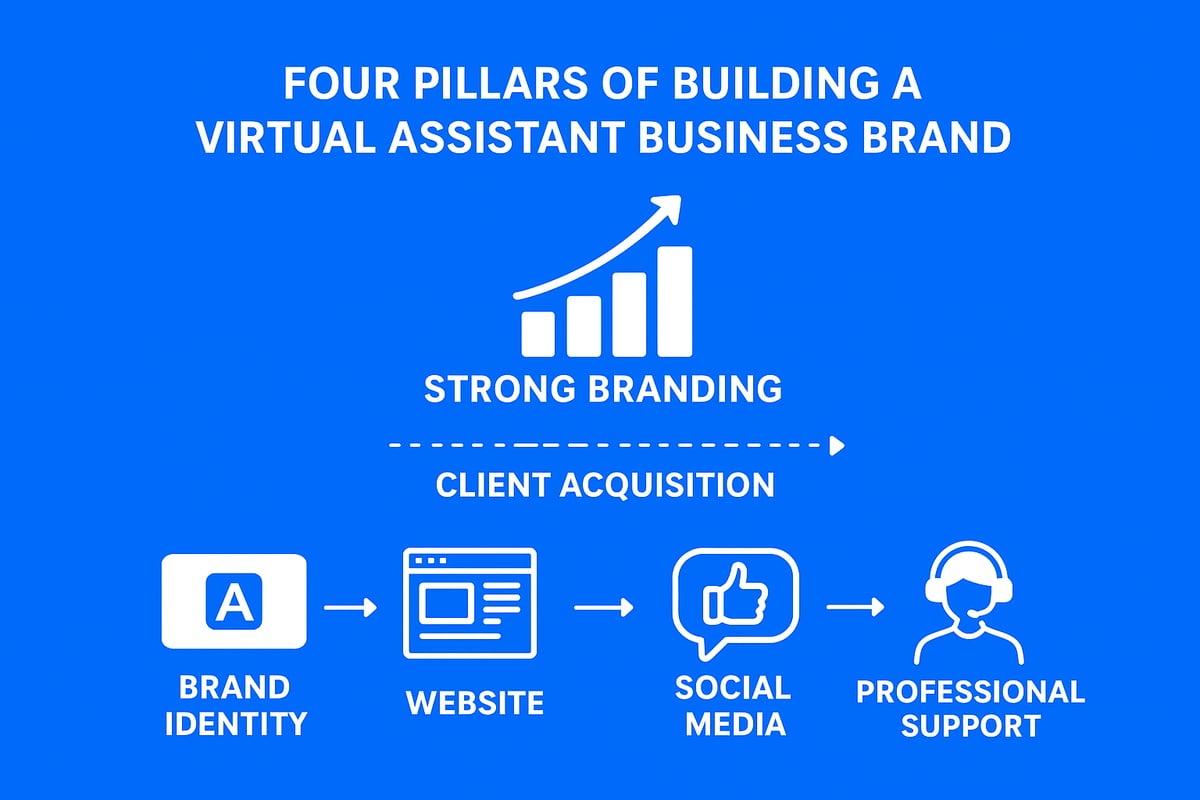
Establishing a strong brand and digital footprint is crucial when starting a virtual assistant business. In today’s competitive market, your online presence is often the first touchpoint for potential clients. Every element, from your business name to your website, communicates your professionalism and value.
Developing a Compelling Brand Identity
Your brand identity is the foundation of starting a virtual assistant business. A memorable business name, professional logo, and clear value proposition set you apart in a crowded market. Think about the clients you want to serve and the impression you want to leave.
Key elements include:
Business name and tagline
Logo and colour palette
Unique value proposition
For tailored advice on crafting your brand, consider Building your brand identity to ensure your business stands out from day one. A strong brand attracts your ideal clients and builds trust quickly when starting a virtual assistant business.
Building a High-Converting Website
A high-converting website is essential for starting a virtual assistant business. Your site should communicate your services, expertise, and credibility in a clear, visually appealing way. Core pages include Home, About, Services, Contact, and Testimonials.
Optimise your website for SEO using keywords clients are searching for, such as “virtual assistant Australia 2026.” Incorporate lead capture forms and strong calls to action. Showcasing client testimonials and case studies adds social proof and boosts trust.
Remember, most clients will research your business online before reaching out, so your website must reflect your professionalism and reliability.
Leveraging Social Media and Online Platforms
Social media presence is a powerful tool when starting a virtual assistant business. Platforms like LinkedIn, Facebook, and Instagram help you connect with potential clients and build authority in your niche.
Share valuable content regularly. This might include tips, industry updates, or client success stories. Participate in VA directories and freelancing platforms to widen your reach and credibility.
Consistent engagement and sharing your expertise online can generate inbound leads and position your business as a go-to solution for clients seeking virtual support.
How Petrel Studio Can Help New Virtual Assistants Launch Successfully
Launching and scaling when starting a virtual assistant business can be overwhelming. Petrel Studio streamlines the process with comprehensive support, including business planning, branding, website development, and system setup.
Their services cover clarity sessions, logo design, launch websites, and automation tools designed for service providers. Many entrepreneurs using Petrel Studio’s packages report faster client acquisition and smoother operations.
With expert guidance and ongoing coaching, you gain a professional edge that positions your business for long-term success in the virtual assistant industry.
Step 3: Legal, Compliance, and Risk Management Essentials
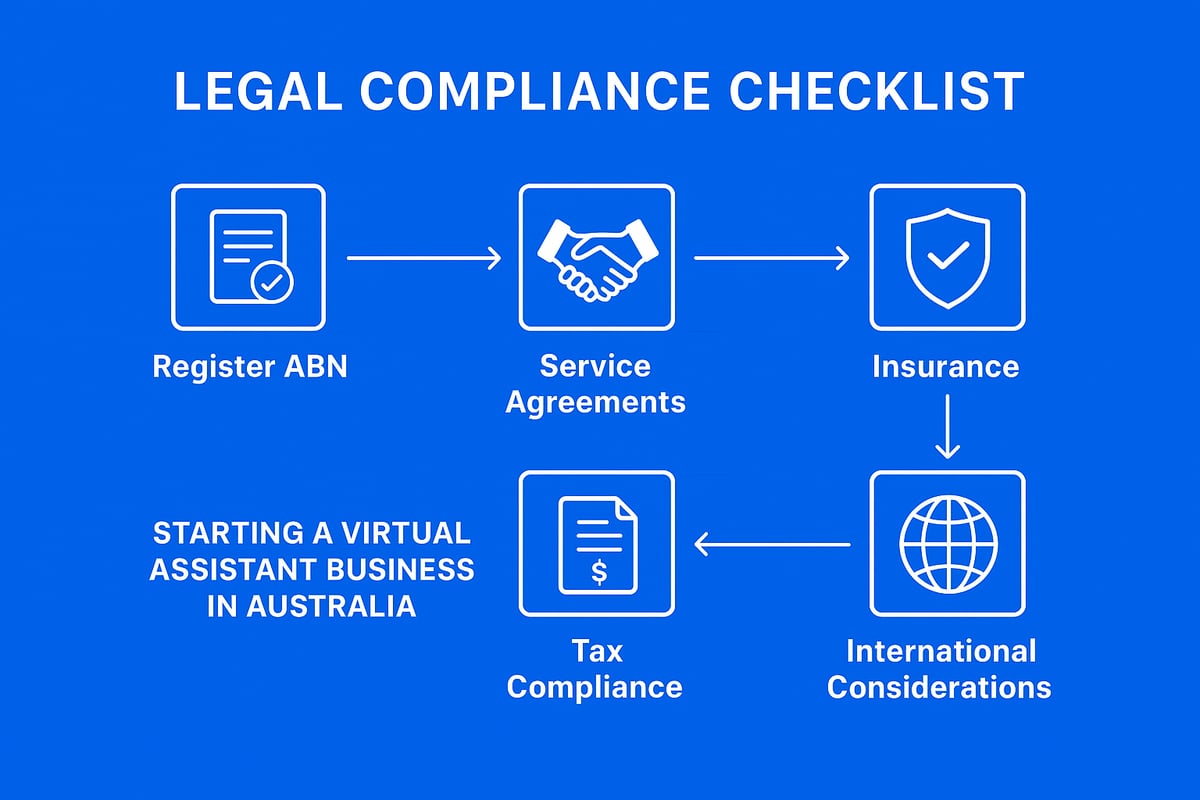
Navigating the legal landscape is critical when starting a virtual assistant business. Proper compliance not only keeps your business safe but also builds trust with clients. This step covers the legal essentials, risk management, and compliance practices every Australian VA must master in 2026.
Understanding Key Legal Obligations and Permits
When starting a virtual assistant business, understanding your legal obligations is a must. You need to comply with Australian Consumer Law, which means always being honest in your marketing and delivering services as promised. If you handle sensitive information, the Privacy Act 1988 applies, so you must safeguard client data.
If you offer bookkeeping, you may need to register as a BAS agent. Failing to meet these requirements can result in fines or reputational damage. According to Sprintlaw, 40% of small businesses face legal issues in their first year, so solid compliance is non-negotiable.
Essential Legal Documents for Virtual Assistants
Drafting the right documents sets a professional tone when starting a virtual assistant business. Key documents include:
Client Service Agreements, defining scope and payment
Privacy Policy, outlining data handling
Website Terms of Use, stating user guidelines
Independent Contractor Agreements, for subcontractors
Non-Disclosure Agreements (NDAs), to protect sensitive information
Customised contracts prevent misunderstandings, clarify deliverables, and make your operations more robust. Spending time on these documents early saves you from disputes and helps you set clear expectations with clients.
Insurance and Financial Compliance
Risk management is crucial when starting a virtual assistant business. The right insurance policies protect you and your clients. Most VAs consider:
Professional indemnity insurance for client claims
Public liability insurance if meeting clients in person
Cyber insurance, which covers data breaches and online threats
By 2025, 55% of service businesses invest in cyber insurance. Insurance not only safeguards your finances, it also reassures clients that you take risk seriously. Review your policies regularly to ensure ongoing compliance as your business grows.
Taxation, Invoicing, and Record Keeping
Tax compliance is a key part of starting a virtual assistant business. Register for an ABN, and if your annual turnover is expected to exceed $75,000, register for GST. Issue invoices that include your ABN and clear payment terms.
Maintain accurate records for at least five years, as required by the ATO. Automated invoicing tools simplify compliance and save you time. For more on systems that streamline compliance, see Essential business systems and tools. Staying on top of your tax requirements prevents costly penalties and keeps your business running smoothly.
Employment Law and Hiring Considerations
If you plan to grow beyond solo work when starting a virtual assistant business, understanding employment law is vital. Know the difference between employees and contractors, as legal obligations differ for each. The Fair Work Act covers minimum pay, entitlements, and workplace policies for employees.
Draft clear agreements for any team members, whether local or overseas. If you hire internationally, research local laws and tax rules. Proper contracts and compliance reduce your risk of disputes and ensure your business can scale safely.
Working with International Clients: Legal and Tax Implications
Expanding globally can be rewarding when starting a virtual assistant business, but it brings added legal and tax requirements. Always specify the governing law in your contracts to avoid confusion. Research international tax rules, including VAT or GST obligations.
Update your privacy policy for cross-border data transfers, such as GDPR for European clients. Use secure payment platforms and clarify which currency you’ll be paid in. Taking these steps not only protects your business but also positions you as a professional in the global marketplace.
Step 4: Acquiring and Retaining Clients
Acquiring and retaining clients is the heartbeat of starting a virtual assistant business. Success depends on how well you define your audience, market your services, set competitive pricing, manage relationships, and build long-term value. Let’s break down each step for maximum impact on your journey.
Identifying and Attracting Your Ideal Clients
The first step in starting a virtual assistant business is to define your ideal client profile. Consider industry, company size, location, and their specific pain points. Are you targeting tech startups, real estate agencies, or e-commerce brands? Tailoring your messaging to each segment will help you stand out.
For example, you might position yourself as "helping busy tech founders automate admin and drive growth." Specialisation not only attracts higher-value clients but also reduces competition. Use a simple table to clarify your focus:
Industry | Services Needed | Value Proposition |
|---|---|---|
Startups | Inbox, scheduling | Scale with less admin overhead |
Real Estate | Data entry, CRM | Hassle-free property support |
Medical | Billing, compliance | Secure, accurate admin help |
Clarity on your target market is essential when starting a virtual assistant business, ensuring you connect with those who value your expertise.
Effective Marketing and Lead Generation Strategies
A strategic approach to marketing will set your business apart. Content marketing, such as blogs and guides, showcases your expertise. Networking in online groups and at industry events helps build credibility, while paid ads can boost visibility.
Establishing a strong digital presence is crucial. Clients are more likely to trust and hire VAs with a professional website and active social profiles. For insights on building your online footprint, see Developing your digital presence.
VAs who blog regularly generate three times more inbound leads. Diversifying your marketing channels increases your reach, a vital tactic when starting a virtual assistant business.
Setting Your Pricing and Packaging Services
Clear and competitive pricing is key to attracting clients. Decide between hourly rates, retainer agreements, or project-based fees. Research competitors and align your pricing with your niche expertise.
Offering tiered packages—such as "Starter," "Growth," and "Premium"—caters to different client needs. Here’s a simple example:
Package | Services Included | Price (AUD) |
|---|---|---|
Starter | Email, calendar | $400/month |
Growth | Starter + social media | $800/month |
Premium | Growth + reporting | $1,200/month |
When starting a virtual assistant business, transparent packages increase trust and help close more deals with confidence.
Onboarding and Managing Client Relationships
A seamless onboarding process sets the tone for long-term success. Use clear contracts to establish expectations, deliverables, and timelines. Onboarding checklists and welcome packs help clients feel supported from day one.
Regular communication, such as weekly updates or monthly reports, builds trust and keeps projects on track. Automated onboarding tools can boost efficiency, making it easier to manage multiple clients as your business grows.
Remember, consistent processes and proactive communication are vital when starting a virtual assistant business. They foster loyalty and reduce misunderstandings.
Upselling, Referrals, and Building Long-Term Partnerships
Growing your client base does not stop at acquisition; it is about nurturing ongoing relationships. Look for opportunities to upsell additional services, such as automation setup or workflow optimisation.
Implement a referral program to encourage introductions from satisfied clients. For example, offer a discount or bonus service for every successful referral. This approach increases client lifetime value and fuels sustainable growth.
Building partnerships and delivering consistently excellent service are essential for starting a virtual assistant business that thrives over time. Focus on value, and your clients will become your best advocates.
Step 5: Scaling, Automation, and Future-Proofing Your VA Business
Scaling and future-proofing are critical steps for anyone starting a virtual assistant business in 2026. As client needs evolve, your ability to adapt, automate, and expand will set you apart. Future-focused VAs blend technology, smart hiring, diversification, and ongoing learning to stay ahead of the curve.
Leveraging Technology and AI for Efficiency
Embracing technology is essential when starting a virtual assistant business. Automation tools can streamline scheduling, invoicing, and CRM updates, freeing up valuable hours each week. AI-powered solutions now handle everything from email management to client reporting, allowing VAs to deliver faster, more accurate results.
Australian small businesses are quickly adopting AI to gain a competitive edge. According to the Australian small business AI adoption report, a growing number of service providers are integrating AI into daily operations. By leveraging these tools, you can serve more clients, reduce manual tasks, and keep your business agile.
Popular tech for VAs includes:
Automated scheduling apps
Cloud-based invoicing platforms
AI assistants for research
CRM integrations
Staying current with new tools ensures your services remain valuable and relevant.
Hiring, Outsourcing, and Building a Team
As your workload increases, building a team becomes a smart move for anyone starting a virtual assistant business. Knowing when to hire subcontractors or employees lets you scale without compromising quality or client satisfaction.
Begin by documenting your processes with standard operating procedures (SOPs). This makes onboarding and training seamless. Use collaboration tools to manage remote staff efficiently, ensuring everyone stays aligned and productive.
Key steps for growing your team:
Identify recurring tasks suitable for delegation
Draft clear contractor or employment agreements
Choose communication platforms for efficient teamwork
Transitioning from solo VA to agency model opens up new revenue streams and increases your capacity to support larger clients.
Expanding Services and Entering New Markets
Diversification is a powerful way to safeguard your future when starting a virtual assistant business. Expand your offerings beyond traditional admin support to include digital marketing, tech assistance, or project management. This flexibility attracts a broader client base and boosts revenue.
Australia's business process outsourcing industry is experiencing robust growth, making it a prime time to explore new markets. According to Australia's business process outsourcing market size, demand for remote services is on the rise both locally and internationally.
Consider these strategies:
Target overseas clients seeking Australian expertise
Adapt services for different industries or regions
Offer tiered packages for varied business sizes
Expanding thoughtfully ensures your business remains resilient in changing markets.
Continuous Learning and Professional Development
Ongoing education is vital for anyone starting a virtual assistant business. The industry evolves rapidly, with new tools, regulations, and client expectations emerging each year. Staying informed helps you maintain a competitive edge and deliver premium services.
Invest in your growth by:
Joining professional VA associations
Attending webinars and industry events
Completing certifications in key software or specialisations
Accredited VAs can often command higher rates and attract more prestigious clients. By prioritising learning and upskilling, you ensure your business can adapt and thrive in a shifting landscape.
Starting your virtual assistant business in 2026 is a big step, and it’s natural to have questions about business planning, branding, systems, or even how to stand out in a growing industry. You don’t have to figure it all out alone. Whether you need clarity on your next move or want guidance on building a strong foundation, I’m here to help you make confident decisions. If you’re ready to turn your ideas into a thriving business and avoid common pitfalls, let’s take the next step together—Book a free consultation and get personalised support tailored to your goals.
Article written using RankPill.
Remote work is reshaping the business world, and the demand for virtual assistants is set to surge as we approach 2026. Entrepreneurs everywhere are seeking flexible, scalable solutions, making starting a virtual assistant business more attractive than ever.
This comprehensive guide will take you through every essential step, from understanding the industry and setting up legally, to effective branding, client acquisition, compliance, and future-proofing your operations. Discover how to build a profitable business, avoid legal hurdles, and carve out your niche in a growing market. Ready to turn your idea into a thriving reality? Let’s get started.
Understanding the Virtual Assistant Industry in 2026
Remote work has rapidly transformed the business landscape, and starting a virtual assistant business is now seen as a smart, future-ready move. Understanding the industry’s scope, trends, and challenges is the first step to building a strong foundation.
What is a Virtual Assistant Business?
A virtual assistant business delivers remote administrative, technical, creative, and support services to clients. Typical offerings include inbox management, bookkeeping, social media, customer support, data entry, research, and executive assistance.
The sector has evolved from solo freelancers to agencies and niche specialists. In Australia, VAs serve both local and international clients, often working from home or co-working hubs. As the industry matures, growth is significant. In fact, the Growth of Australia's VA and OBM industry shows an 18% year-on-year increase as of 2025.
Gaining clarity on your services and understanding industry trends is essential when starting a virtual assistant business.
Is a Virtual Assistant Business Right for You?
Not everyone is suited to starting a virtual assistant business. Success begins with strong organisation, excellent communication, self-motivation, and adaptability. You’ll need proficiency in digital tools, time management, and client relations.
Deciding between being a generalist or a specialist is crucial. For example, VAs focused on medical admin or real estate support often command higher rates.
A clear business plan helps you assess your fit and direction, which is vital before starting a virtual assistant business.
Market Trends and Opportunities in 2026
The future is bright for those interested in starting a virtual assistant business. Remote work is now normal, so businesses are increasingly outsourcing support functions. Demand is rising for VAs skilled in tech and AI, like automation, CRM, and project management.
Australian VAs are attractive to global clients due to English fluency and favourable time zones. Around 60% of SMEs now outsource at least one function. By staying informed on these trends, you can position yourself for long-term success when starting a virtual assistant business.
Common Challenges and How to Overcome Them
Starting a virtual assistant business comes with challenges. Competition is fierce, so differentiation is key. Many VAs face isolation and must develop strong self-discipline.
Rapid tech changes require ongoing upskilling. Those who adopt AI tools and robust systems can offer more value and efficiency. Continued learning and building solid operational processes are essential for sustainability in starting a virtual assistant business.
Step 1: Planning and Setting Up Your Virtual Assistant Business
Starting a virtual assistant business in 2026 means entering a dynamic landscape with endless potential. Careful planning and a solid foundation are essential for long-term success. This step-by-step guide walks you through the core actions required to move from idea to launch, ensuring every detail is covered for a smooth start.
Researching the Market and Defining Your Services
Understanding your target market is the first step in starting a virtual assistant business. Analyse the services and pricing offered by competitors to identify gaps. Look for underserved niches, such as industry-specific admin or creative support, where you can offer unique value.
Decide which core services you will provide. Common options include social media management, inbox triage, bookkeeping, and executive assistance. Package your services as hourly, retainer, or project-based options to suit different client needs.
Specialising in a niche can help you reduce competition and increase your rates. By focusing your marketing and refining your skills, starting a virtual assistant business becomes more manageable and profitable.
Choosing the Right Business Structure
Selecting the right business structure is crucial when starting a virtual assistant business. In Australia, the main options are sole trader, partnership, and company. Your choice affects tax, liability, and growth potential.
Structure | Pros | Cons |
|---|---|---|
Sole Trader | Simple setup, low cost, full control | Unlimited liability, less credibility |
Partnership | Shared responsibility, easy to form | Joint liability, potential conflicts |
Company | Limited liability, scalable | Higher costs, more compliance |
Most virtual assistants begin as sole traders, then move to a company structure as their business grows. According to Sprintlaw, sole trader remains the most popular entry point. Consider your long-term goals when choosing a structure for starting a virtual assistant business.
Registering Your Business and Meeting Legal Requirements
Registering your business is a vital step in starting a virtual assistant business. Obtain an Australian Business Number (ABN) and register your business name with ASIC if you are not trading under your own name. Consider trademark registration to protect your brand identity.
If you plan to incorporate, you will need to obtain an Australian Company Number (ACN). Before registering, check the availability of your chosen business name and potential trademarks to avoid legal issues.
Compliance at this stage ensures your business starts on solid legal ground. Proper registration is essential for building trust with clients and avoiding costly mistakes when starting a virtual assistant business.
Setting Up Business Finances and Banking
Financial organisation is key to starting a virtual assistant business efficiently. Open a dedicated business bank account to separate personal and business finances. This makes tax reporting and compliance much easier.
Invest in accounting software to manage invoicing, expenses, and record keeping. If your turnover is expected to exceed $75,000 per year, register for GST with the ATO. Most small businesses now use cloud-based tools for financial management.
Keeping your finances organised from day one ensures you stay compliant and have a clear picture of your business health. This step is essential for anyone starting a virtual assistant business.
Creating a Business Plan and Growth Strategy
A detailed business plan is a must when starting a virtual assistant business. Define your vision, mission, goals, and target market. Map out your marketing approach, financial forecasts, and operational plans for at least the first year.
Break your launch into a 90-day action plan to build early momentum. A written plan increases your accountability and helps you track progress. For expert guidance, consider Business planning and clarity sessions to refine your strategy and avoid common pitfalls.
A strong plan brings clarity and direction, making starting a virtual assistant business less overwhelming and more strategic.
Essential Tools and Systems for Virtual Assistants
Using the right tools and systems streamlines operations when starting a virtual assistant business. Project management platforms like Asana, Trello, or Notion help you track tasks and deadlines. Communication tools such as Slack, Zoom, and Microsoft Teams support collaboration with clients.
File sharing services like Google Workspace and Dropbox keep your documents organised. Automation tools, including AI-powered scheduling and CRM systems, can boost your efficiency and save your clients time.
VAs who leverage automation and smart systems deliver more value and operate at a higher level. Investing in these tools is a smart move for anyone starting a virtual assistant business.
Step 2: Branding, Positioning, and Building Your Online Presence
Establishing a strong brand and digital footprint is crucial when starting a virtual assistant business. In today’s competitive market, your online presence is often the first touchpoint for potential clients. Every element, from your business name to your website, communicates your professionalism and value.
Developing a Compelling Brand Identity
Your brand identity is the foundation of starting a virtual assistant business. A memorable business name, professional logo, and clear value proposition set you apart in a crowded market. Think about the clients you want to serve and the impression you want to leave.
Key elements include:
Business name and tagline
Logo and colour palette
Unique value proposition
For tailored advice on crafting your brand, consider Building your brand identity to ensure your business stands out from day one. A strong brand attracts your ideal clients and builds trust quickly when starting a virtual assistant business.
Building a High-Converting Website
A high-converting website is essential for starting a virtual assistant business. Your site should communicate your services, expertise, and credibility in a clear, visually appealing way. Core pages include Home, About, Services, Contact, and Testimonials.
Optimise your website for SEO using keywords clients are searching for, such as “virtual assistant Australia 2026.” Incorporate lead capture forms and strong calls to action. Showcasing client testimonials and case studies adds social proof and boosts trust.
Remember, most clients will research your business online before reaching out, so your website must reflect your professionalism and reliability.
Leveraging Social Media and Online Platforms
Social media presence is a powerful tool when starting a virtual assistant business. Platforms like LinkedIn, Facebook, and Instagram help you connect with potential clients and build authority in your niche.
Share valuable content regularly. This might include tips, industry updates, or client success stories. Participate in VA directories and freelancing platforms to widen your reach and credibility.
Consistent engagement and sharing your expertise online can generate inbound leads and position your business as a go-to solution for clients seeking virtual support.
How Petrel Studio Can Help New Virtual Assistants Launch Successfully
Launching and scaling when starting a virtual assistant business can be overwhelming. Petrel Studio streamlines the process with comprehensive support, including business planning, branding, website development, and system setup.
Their services cover clarity sessions, logo design, launch websites, and automation tools designed for service providers. Many entrepreneurs using Petrel Studio’s packages report faster client acquisition and smoother operations.
With expert guidance and ongoing coaching, you gain a professional edge that positions your business for long-term success in the virtual assistant industry.
Step 3: Legal, Compliance, and Risk Management Essentials
Navigating the legal landscape is critical when starting a virtual assistant business. Proper compliance not only keeps your business safe but also builds trust with clients. This step covers the legal essentials, risk management, and compliance practices every Australian VA must master in 2026.
Understanding Key Legal Obligations and Permits
When starting a virtual assistant business, understanding your legal obligations is a must. You need to comply with Australian Consumer Law, which means always being honest in your marketing and delivering services as promised. If you handle sensitive information, the Privacy Act 1988 applies, so you must safeguard client data.
If you offer bookkeeping, you may need to register as a BAS agent. Failing to meet these requirements can result in fines or reputational damage. According to Sprintlaw, 40% of small businesses face legal issues in their first year, so solid compliance is non-negotiable.
Essential Legal Documents for Virtual Assistants
Drafting the right documents sets a professional tone when starting a virtual assistant business. Key documents include:
Client Service Agreements, defining scope and payment
Privacy Policy, outlining data handling
Website Terms of Use, stating user guidelines
Independent Contractor Agreements, for subcontractors
Non-Disclosure Agreements (NDAs), to protect sensitive information
Customised contracts prevent misunderstandings, clarify deliverables, and make your operations more robust. Spending time on these documents early saves you from disputes and helps you set clear expectations with clients.
Insurance and Financial Compliance
Risk management is crucial when starting a virtual assistant business. The right insurance policies protect you and your clients. Most VAs consider:
Professional indemnity insurance for client claims
Public liability insurance if meeting clients in person
Cyber insurance, which covers data breaches and online threats
By 2025, 55% of service businesses invest in cyber insurance. Insurance not only safeguards your finances, it also reassures clients that you take risk seriously. Review your policies regularly to ensure ongoing compliance as your business grows.
Taxation, Invoicing, and Record Keeping
Tax compliance is a key part of starting a virtual assistant business. Register for an ABN, and if your annual turnover is expected to exceed $75,000, register for GST. Issue invoices that include your ABN and clear payment terms.
Maintain accurate records for at least five years, as required by the ATO. Automated invoicing tools simplify compliance and save you time. For more on systems that streamline compliance, see Essential business systems and tools. Staying on top of your tax requirements prevents costly penalties and keeps your business running smoothly.
Employment Law and Hiring Considerations
If you plan to grow beyond solo work when starting a virtual assistant business, understanding employment law is vital. Know the difference between employees and contractors, as legal obligations differ for each. The Fair Work Act covers minimum pay, entitlements, and workplace policies for employees.
Draft clear agreements for any team members, whether local or overseas. If you hire internationally, research local laws and tax rules. Proper contracts and compliance reduce your risk of disputes and ensure your business can scale safely.
Working with International Clients: Legal and Tax Implications
Expanding globally can be rewarding when starting a virtual assistant business, but it brings added legal and tax requirements. Always specify the governing law in your contracts to avoid confusion. Research international tax rules, including VAT or GST obligations.
Update your privacy policy for cross-border data transfers, such as GDPR for European clients. Use secure payment platforms and clarify which currency you’ll be paid in. Taking these steps not only protects your business but also positions you as a professional in the global marketplace.
Step 4: Acquiring and Retaining Clients
Acquiring and retaining clients is the heartbeat of starting a virtual assistant business. Success depends on how well you define your audience, market your services, set competitive pricing, manage relationships, and build long-term value. Let’s break down each step for maximum impact on your journey.
Identifying and Attracting Your Ideal Clients
The first step in starting a virtual assistant business is to define your ideal client profile. Consider industry, company size, location, and their specific pain points. Are you targeting tech startups, real estate agencies, or e-commerce brands? Tailoring your messaging to each segment will help you stand out.
For example, you might position yourself as "helping busy tech founders automate admin and drive growth." Specialisation not only attracts higher-value clients but also reduces competition. Use a simple table to clarify your focus:
Industry | Services Needed | Value Proposition |
|---|---|---|
Startups | Inbox, scheduling | Scale with less admin overhead |
Real Estate | Data entry, CRM | Hassle-free property support |
Medical | Billing, compliance | Secure, accurate admin help |
Clarity on your target market is essential when starting a virtual assistant business, ensuring you connect with those who value your expertise.
Effective Marketing and Lead Generation Strategies
A strategic approach to marketing will set your business apart. Content marketing, such as blogs and guides, showcases your expertise. Networking in online groups and at industry events helps build credibility, while paid ads can boost visibility.
Establishing a strong digital presence is crucial. Clients are more likely to trust and hire VAs with a professional website and active social profiles. For insights on building your online footprint, see Developing your digital presence.
VAs who blog regularly generate three times more inbound leads. Diversifying your marketing channels increases your reach, a vital tactic when starting a virtual assistant business.
Setting Your Pricing and Packaging Services
Clear and competitive pricing is key to attracting clients. Decide between hourly rates, retainer agreements, or project-based fees. Research competitors and align your pricing with your niche expertise.
Offering tiered packages—such as "Starter," "Growth," and "Premium"—caters to different client needs. Here’s a simple example:
Package | Services Included | Price (AUD) |
|---|---|---|
Starter | Email, calendar | $400/month |
Growth | Starter + social media | $800/month |
Premium | Growth + reporting | $1,200/month |
When starting a virtual assistant business, transparent packages increase trust and help close more deals with confidence.
Onboarding and Managing Client Relationships
A seamless onboarding process sets the tone for long-term success. Use clear contracts to establish expectations, deliverables, and timelines. Onboarding checklists and welcome packs help clients feel supported from day one.
Regular communication, such as weekly updates or monthly reports, builds trust and keeps projects on track. Automated onboarding tools can boost efficiency, making it easier to manage multiple clients as your business grows.
Remember, consistent processes and proactive communication are vital when starting a virtual assistant business. They foster loyalty and reduce misunderstandings.
Upselling, Referrals, and Building Long-Term Partnerships
Growing your client base does not stop at acquisition; it is about nurturing ongoing relationships. Look for opportunities to upsell additional services, such as automation setup or workflow optimisation.
Implement a referral program to encourage introductions from satisfied clients. For example, offer a discount or bonus service for every successful referral. This approach increases client lifetime value and fuels sustainable growth.
Building partnerships and delivering consistently excellent service are essential for starting a virtual assistant business that thrives over time. Focus on value, and your clients will become your best advocates.
Step 5: Scaling, Automation, and Future-Proofing Your VA Business
Scaling and future-proofing are critical steps for anyone starting a virtual assistant business in 2026. As client needs evolve, your ability to adapt, automate, and expand will set you apart. Future-focused VAs blend technology, smart hiring, diversification, and ongoing learning to stay ahead of the curve.
Leveraging Technology and AI for Efficiency
Embracing technology is essential when starting a virtual assistant business. Automation tools can streamline scheduling, invoicing, and CRM updates, freeing up valuable hours each week. AI-powered solutions now handle everything from email management to client reporting, allowing VAs to deliver faster, more accurate results.
Australian small businesses are quickly adopting AI to gain a competitive edge. According to the Australian small business AI adoption report, a growing number of service providers are integrating AI into daily operations. By leveraging these tools, you can serve more clients, reduce manual tasks, and keep your business agile.
Popular tech for VAs includes:
Automated scheduling apps
Cloud-based invoicing platforms
AI assistants for research
CRM integrations
Staying current with new tools ensures your services remain valuable and relevant.
Hiring, Outsourcing, and Building a Team
As your workload increases, building a team becomes a smart move for anyone starting a virtual assistant business. Knowing when to hire subcontractors or employees lets you scale without compromising quality or client satisfaction.
Begin by documenting your processes with standard operating procedures (SOPs). This makes onboarding and training seamless. Use collaboration tools to manage remote staff efficiently, ensuring everyone stays aligned and productive.
Key steps for growing your team:
Identify recurring tasks suitable for delegation
Draft clear contractor or employment agreements
Choose communication platforms for efficient teamwork
Transitioning from solo VA to agency model opens up new revenue streams and increases your capacity to support larger clients.
Expanding Services and Entering New Markets
Diversification is a powerful way to safeguard your future when starting a virtual assistant business. Expand your offerings beyond traditional admin support to include digital marketing, tech assistance, or project management. This flexibility attracts a broader client base and boosts revenue.
Australia's business process outsourcing industry is experiencing robust growth, making it a prime time to explore new markets. According to Australia's business process outsourcing market size, demand for remote services is on the rise both locally and internationally.
Consider these strategies:
Target overseas clients seeking Australian expertise
Adapt services for different industries or regions
Offer tiered packages for varied business sizes
Expanding thoughtfully ensures your business remains resilient in changing markets.
Continuous Learning and Professional Development
Ongoing education is vital for anyone starting a virtual assistant business. The industry evolves rapidly, with new tools, regulations, and client expectations emerging each year. Staying informed helps you maintain a competitive edge and deliver premium services.
Invest in your growth by:
Joining professional VA associations
Attending webinars and industry events
Completing certifications in key software or specialisations
Accredited VAs can often command higher rates and attract more prestigious clients. By prioritising learning and upskilling, you ensure your business can adapt and thrive in a shifting landscape.
Starting your virtual assistant business in 2026 is a big step, and it’s natural to have questions about business planning, branding, systems, or even how to stand out in a growing industry. You don’t have to figure it all out alone. Whether you need clarity on your next move or want guidance on building a strong foundation, I’m here to help you make confident decisions. If you’re ready to turn your ideas into a thriving business and avoid common pitfalls, let’s take the next step together—Book a free consultation and get personalised support tailored to your goals.
Article written using RankPill.